Századvég was established in 1993 as an intellectual workshop of the young generation that played an active role in the political changes of 1989-1990 in Hungary. The founders’ aim was to create an intellectual and professional base to provide reliable support for Hungarian opinion leaders in a period of social and economic transition.
In the 30 years since then, the world around us has not become less controversial, but it has accelerated considerably, flooding us with an almost unimaginable amount of possibilities and impulses. As complication has increased, so has problem complexity, while we have to form opinions on more and more abstract and relatively distant issues.
Századvég’s mission is to help you see clearly so that you can make better decisions. And good decisions require two things: clear objectives and substantial information.
We work to learn and understand Hungarian and international economic and social processes, and thus provide useful and understandable knowledge to decision-makers, whether they are corporate, governmental or private.
Kinga Kenyeres
Chief Executive Officer
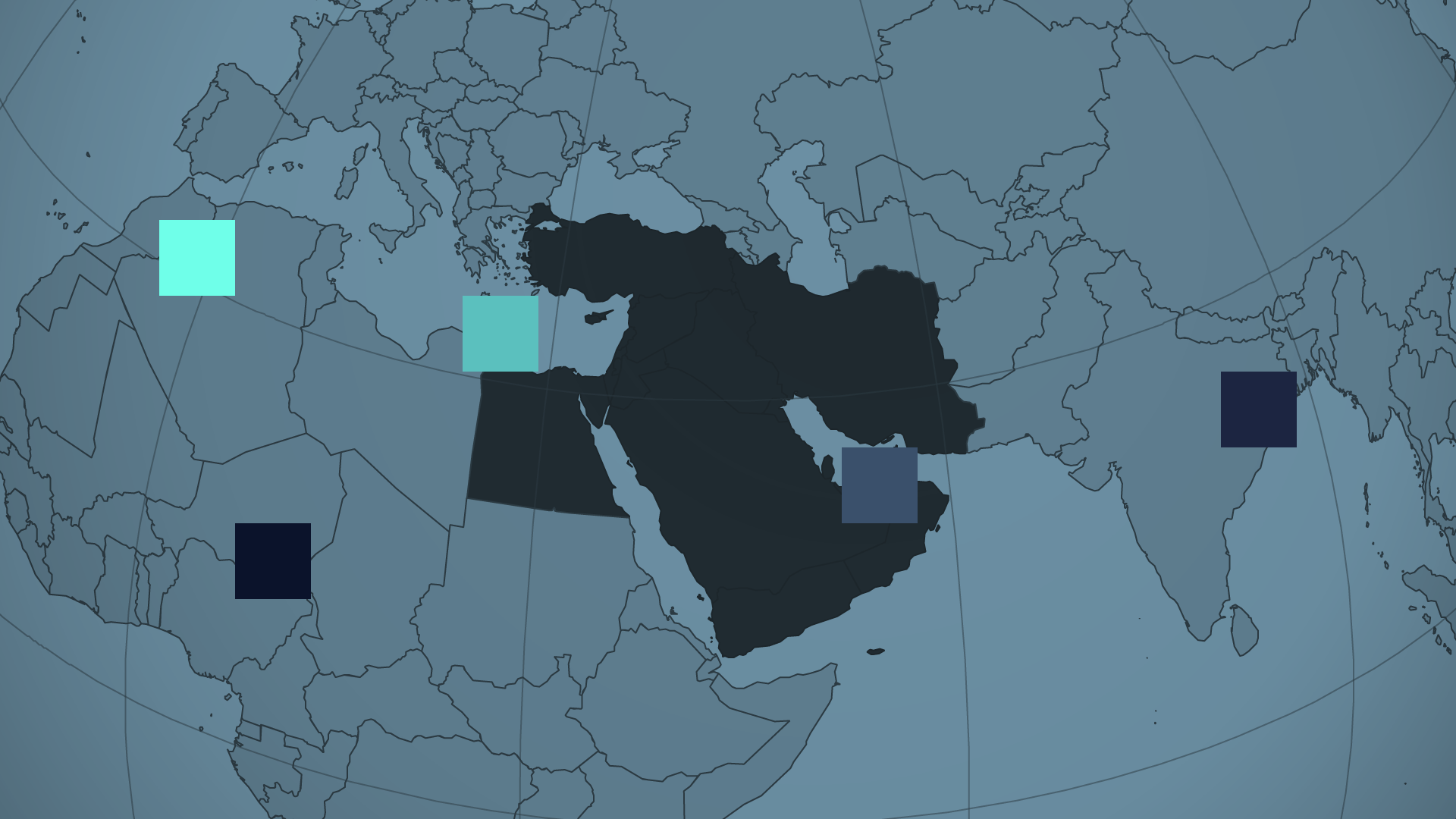
Like many other ethnic and religious minorities in the Middle East, the Kurds are also victims of the unsuccessful (or thwarted) and protracted transition from empires to nation-states. After a century of tragic struggle, they achieved semi-autonomous status in Iraq. Despite having established independent political entities in Iran for a brief period and waging a guerrilla war for several decades, the political aspirations of Iranian Kurds have not been successful. Depending on how the war currently raging in Iran (which began on 28 February 2026) unfolds, and whether the Kurds are prepared to bear the high costs of the struggle against the dying but stubborn Islamic regime, the Kurds’ aspirations for autonomy or independence in Iran may eventually come to fruition. In this paper, we provide a brief overview of the demographic, military and political significance of Iranian Kurds, as well as how the situation of Iraqi and Syrian Kurds influences and affects Iranian Kurds. After that, we will examine how they are reacting to the war in Iran. We conclude this analysis by examining possible scenarios for the future of Iranian Kurds.
Századvég Konjunktúrakutató estimates that the Hungarian economy could grow by 1.5% in 2026, followed by 2.6% growth in 2027. The primary reason for revising downwards the growth outlook is the war that has since broken out in the Middle East, which has a slowing effect on the global economy due to increased international vulnerability and the disruption of some shipping routes. The two-week ceasefire announced on 8 April 2026 could mitigate the negative risks stemming from the war in Iran, the biggest source of uncertainty, which immediately caused oil prices to fall and also gives cause for further optimism. Consumption growth continues to fuel economic growth; however, a stronger external economic environment and a rise in investments are essential for growth to remain sustainable in the long term.
MORE REPORTS
In a unique way, Project 28 conducted the widest possible survey of 1,000, that is a total of 28,000 randomly selected adults in each country. Gaining an understanding of society’s sense of prosperity and mapping the population’s attitudes towards the performance of the European Union, the migration crisis and the increasing terrorism were among the most important goals of the analysis. Following the surveys in 2017, 2018 and 2019, on behalf of the government, the Századvég Foundation has been conducting the research under the name of Project Europe since 2020, which continued to reflect on the topics that most dominated the European political and social discourse.
PROJECT EUROPE
Lorem ipsum dolor sit amet, consectetur adipiscing elit, sed do eiusmod tempor incididunt ut labore et dolore magna aliqua. Ut enim ad minim veniam, quis nostrud exercitation ullamco laboris nisi ut aliquip ex ea commodo consequat. Duis aute irure dolor in reprehenderit in voluptate velit esse cillum dolore eu fugiat nulla pariatur. Excepteur sint occaecat cupidatat non proident, sunt in culpa qui officia deserunt mollit anim id est laborum.